


What is Cannabis?
The Greener way to healthcare
According to Britannica.com, 'Cannabis, is the genus of Medicinal, Recreational, and Fiber plants belonging to the family Cannabaceae.
By some classifications, the genus Cannabis comprises a single species, Hemp (Cannabis sativa), a stout, aromatic, erect annual herb that originated in Central Asia and is now cultivated worldwide. A tall cane-like variety is raised for the production of hemp fiber, while the female plants of a short branchier variety are prized as the more abundant source of the psychoactive substance tetrahydrocannabinol (THC), the active ingredient of Marijuana.
Medical Cannabis, also called Medical Marijuana, herbal drug derived from plants of the genus Cannabis that is used as part of the treatment for a specific symptom or disease. Although the term Cannabis refers specifically to the plant genus, it is also used interchangeably with Marijuana, which describes the crude drug isolated from the plants’ leaves and flowers. While cannabis has a long history of medical use as an analgesic (pain reliever) and antispasmodic agent, for much of the modern era there existed a general lack of awareness among scientists and physicians of its medical benefits.'
Cannabis
CBD, THC? Indica, Hybrids, Ruderalis, Sativa? Let's break down what each of these means.
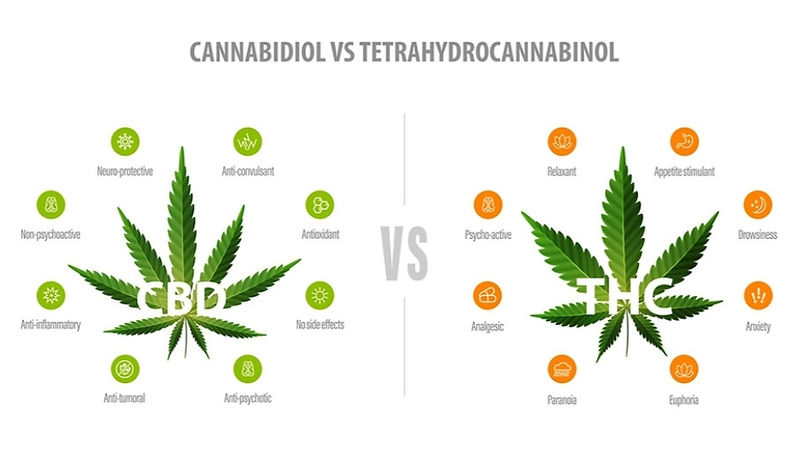
THC vs CBD
THC also known as Tetrahydrocannabinol, is the active compound in Cannabis that causes the psychological effects that Marijuana is known for. It's what cause people to have the euphoric & "high" feeling.
CBD also know as Cannabidiol, is another prevalent active compound in the Cannabis plant, according to Harvard Medical School, while CBD is an essential component of Medical Marijuana, it is derived directly from the hemp plant, a cousin of Marijuana, or manufactured in a laboratory. One of hundreds of components in marijuana, CBD does not cause a "high" by itself.
There are over 400 compounds found in the Cannabis plants with their own medical benefits, not just CBD & THC. Here are just a few,
THCA (Δ9-tetrahydrocannabinolic acid A) is the most abundant non-psychoactive cannabinoid found in cannabis. It works to relieve inflammation, pain and is an ideal cannabinoid for treating symptoms of such conditions as arthritis, seizures.
It is also an effective neuroprotectant, so it is beneficial in the treatment of such conditions as multiple sclerosis, Alzheimer’s and Parkinson’s disease. It can also help to stimulate the appetite in patients suffering from cachexia and anorexia nervosa. Most impressively, research shows that THC-A helps to slow the proliferation of cancerous cells. ~ Cresco Labs
CBN (cannabinol) works as a sleep aid for those with insomnia, has show relief to patients that suffer from fibromyalgia or Crohn's disease. Relieving them of Joint & Muscle pain. Research has also shown us of its ability to fight off bacteria.
CBDA (cannabidiolic acid) helps with Pain & Swelling and has show signs of working as a more effective Pain Reliver than that of CBD. It is also potentially effective against SARS-CoV-2 (COVID-19)
CBG (cannabigerol) According to CrescoLabs CBG works to fight inflammation, pain, nausea and works to slow the proliferation of cancer cells. Research has shown it also significantly reduces intraocular eye pressure caused by glaucoma. Strains high in CBG will be beneficial to treating conditions such as inflammatory bowel disease, Crohn's disease, and cancer.
Chemical Structure
CBD and THC have the same chemical formula -- 21 carbon atoms, 30 hydrogen atoms, and two oxygen atoms. The difference lies in the way the atoms are arranged. That gives CBD and THC different chemical properties, and they affect your body differently.
Both CBD and THC work with receptors that release neurotransmitters in your brain. They can affect things like pain, mood, sleep, and memory.
How CBD and THC Affect the Body
We have two types of cannabinoid receptors in our bodies. THC binds with receptors -- mostly in the brain -- that control pain, mood, and other feelings. That's why THC can make you feel euphoric and give you that so-called high.
CBD doesn't cause that high. Instead, it's thought to work with other elements in the body linked to feelings of well-being. ~ WebMD.com

Hybrid
Species: C. hybrid
Family: Cannabaceae
Order: Rosales
Genus: Cannabis
Kingdom: Plantae
Hybrid refers to a strain created by combining both indica and sativa strains. Many producers crossbreed cannabis plants to develop new strains with specific characteristics. Experts suggest that there are over 700 strains of Cannabis.
Each plant may have different medicinal and recreational purposes. Researchers need to carry out further studies to better understand this complex plant and its effects on humans. ~ MedicalNewsToday
Common Strains; Blue Dream, Gorilla Glue, Gelato, Skywalker, OG Kush, Chemdawg

Indica
Species: C. indica
Family: Cannabaceae
Order: Rosales
Genus: Cannabis
Kingdom: Plantae
Origin: Cannabis Indica is native to Afghanistan, India, Pakistan, and Turkey. The plants have adapted to the often harsh, dry, and turbulent climate of the Hindu Kush mountains.
Plant description: Indica plants are short and stocky with bushy greenery and chunky leaves that grow wide and broad. They grow faster than sativa, and each plant produces more buds.
Indica is sought after for its intensely relaxing effects. It may also help reduce nausea and pain and increase appetite. Daytime or nighttime use: Because of its deep relaxation effects, Indica is better consumed at night. ~HealthLine
Common Strains; Hindu Kush, Afghan Kush, Granddaddy Purple. Northern Lights, Sensi Star
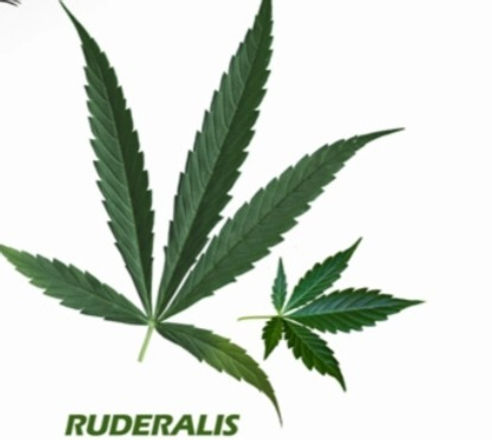
Ruderalis
Species: C. ruderalis
Family: Cannabaceae
Order: Rosales
Genus: Cannabis
Kingdom: Plantae
Cannabis Ruderalis, is a low-THC variety, subspecies, or species of Cannabis which is native to Central and Eastern Europe and Russia ~Wikipedia
Ruderalis is a species that has low THC concentration and low-mid CBD concentration.
Used mainly to help treat epilepsy & anxiety.
There is current controversy about where Ruderals belongs. Does it belong along side Indica & Sativa or is it a species in its own right?
Let us know your thoughts in our Forum!
Common Strains; Amnesia Haze Automatic, Auto Mazar, Royal Haze Automatic.

Sativa
Species: C. sativa
Family: Cannabaceae
Order: Rosales
Genus: Cannabis
Kingdom: Plantae
Origin: Cannabis sativa is found primarily in hot, dry climates with long sunny days. These include Africa, Central America, Southeast Asia, and portions of Western Asia.
Plant description: Sativa plants are tall and thin with finger-like leaves. They can grow taller than 12 feet, and they take longer to mature than some other types of cannabis.
Sativa often produces a “mind high,” or an energizing, anxiety-reducing effect. If you use sativa-dominant strains, you may feel productive and creative, not relaxed and lethargic. Because of its stimulating impact, you can use sativa in the daytime. ~ HealthLine
Common strains; Acapulco Gold, Panama Red, and Durban Poison. Blue Dream, Pineapple Express.
Endocannabinoid System
What is the Endocannabinoid System & Why is it important?
According to Wikipedia ~ The Endocannabinoid System is a biological system composed of Endocannabinoids, which are endogenous lipid-based retrograde neurotransmitters that bind to cannabinoid receptors, and Cannabinoid receptor proteins that are expressed throughout the vertebrate, Central nervous system and peripheral nervous system.
According to Pubmed.ncbi.nim.gov ~ The Endocannabinoid System has been recently recognized as an important modulatory system in the function of Brain, Endocrine, an Immune tissues, It appears to play a very important regulatory role in the secretion of hormones related to reproductive functions and response to stress.
As of right now there are two primary Cannabinoid receptors that have been identified.
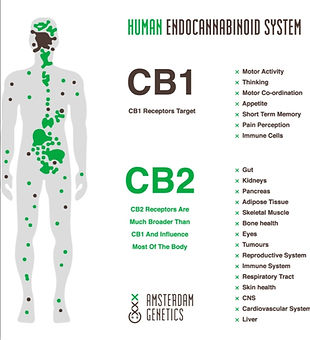
CB1 Receptors
CB1 Receptors are found predominantly in the Brain & Nervous System, as well as in Peripheral Organs & Tissues.
CB2 Receptors
CB2 Receptors are found in the tonsils, White Blood cells, Spleen and Peripheral Nervous System


Terpenes
What are Terpenes & Why Do They Matter?
Terpenes are highly aromatic compounds that determine and create the characteristic scent of many plants and herbs, such as Cannabis, Rosemary, Pine, and Lavender, as well as fresh Orange peel and some animals. Manufacturers use isolated terpenes to create the flavors and scents of many everyday products, such as perfumes, body products, and even foods. Though many people commonly associate Terpenes with Cannabis because Cannabis plants contain high concentrations of them.
As you read below about the main Terpenes found in our most common legal strains of Cannabis, You will see their many different uses and actions. Understanding then, why they are so important to our body and medical advancements.
Knowing Terpenes helps you understand what you need when talking with your Herbalist, Doctor, Budtender &/or Pharmacist.
Bisabolol
BISA
Found in Chamomile & Candeia Trees, Bisabolol is used to treat Cancer & Skin Lesions with its Anti-Fungal, Anti-Nociceptive & Anti-Inflammatory actions.
In Cannabis, Patients find the Bisabolol Terpene to have a calming effect and also being a pain reliever.
You'll find Bisabolol in these Cannabis strains, Harle-Tsu, ACDC, Pink Kush, Headband, Master Kush, NY Diesel, Rockstar, OG Shark, Kali Mist.
Vaporizes @ 597°F (314°C)

Cannabis Medication
Cannabis has been the leading treatment in so many diseases and illnesses. Here is a few of the pharmaceutical medications that our Wyomingites deserve to have.
CT-3

Dexanabinol
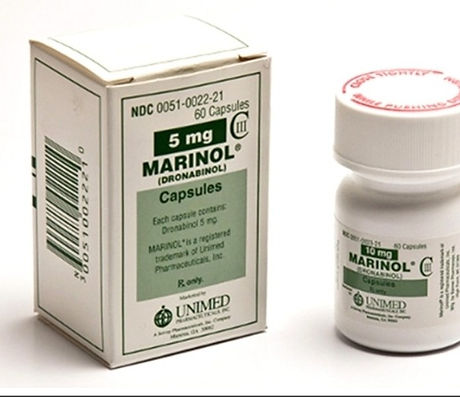
Dronabinol
Epidiolex

HU 308
HU 331
Nabilone

Nabiximols

Rimonabant

Taranabant
Sativex®
a whole plant medicinal cannabis extract indicated for the relief of multiple sclerosis (MS) symptoms and the treatment of severe neuropathic-related cancer pain ~ Clinical Trials Arena
Reinforcing our Commitment
Along with bone regeneration it also reduces blood pressure, is an anti-inflammatory agent, antihypertensive agent & an apoptosis inhibitor.
One Step at a Time
The U.S. FDA has approved Epidiolex (cannabidiol) oral solution for the treatment of two rare and severe forms of epilepsy, Lennox-Gastaut syndrome and Dravet syndrome.
(Marinol® and Syndros®
Dronabinol, which is a synthetic form of THC, is available in an Oral Solution (Syndros®) and as an Oral Capsule (Marinol®).
They are used and FDA Approved to treat adults "with anorexia associated with weight loss in AIDS and for the treatment of adults with nausea and vomiting associated with cancer chemotherapy."
Reinforcing our Commitment
Dexanabinol is currently in phase III clinical trials for severe head injury. It is a promising drug that appears to be able to provide the therapeutic benefits of uncompetitive NMDA-receptor antagonists without the adverse side effects associated with some of the earlier drugs of this type. ~National Library of Medicine
Ajulemic Acid
It is being developed for the treatment of Inflammatory and Fibrotic conditions such as Systemic Sclerosis, Dermatomyositis and Cystic Fibrosis. It does not share the anti-emetic effects of some other cannabinoids, but may be useful for treating chronic inflammatory conditions where inflammation fails to resolve.
Side effects include dry mouth, tiredness, and dizziness.
~Wiki